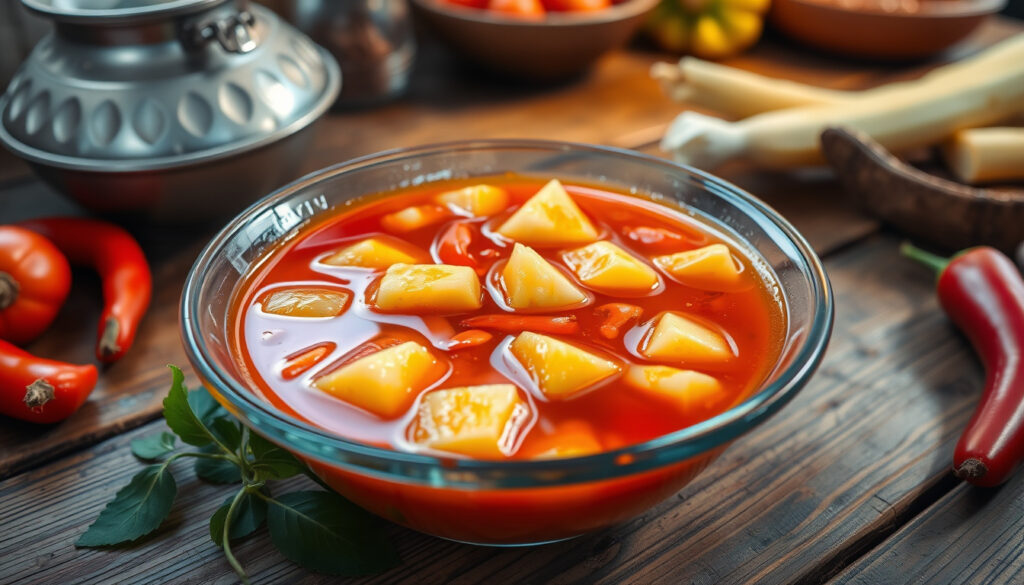
Sweet and Sour Sauce Recipe: Homemade in 5 Minutes
Few glazes carry the same instant appeal as a good sweet and sour sauce — that glossy, tangy-sweet coating that makes crispy chicken, pork, and egg rolls impossible to resist. If you’ve ever wondered why the takeaway version tastes so distinctly different from anything bottled, the answer lies in a few smart swaps and a short list of ingredients you probably already have. This guide pulls together tested recipes from top sources so you can nail that restaurant-quality punch at home, and the whole thing comes together in about five minutes.
Core ingredients: 4-6 (ketchup, sugar, vinegar, soy) · Prep time: 5 minutes · Common styles: Chinese takeaway, basic homemade · Key add-ins: Pineapple juice, brown sugar
Quick snapshot
- Core formula = sugar + acid + umami + ketchup or tomato paste (Sauce Fanatic)
- Cornstarch slurry thickens in 3-5 minutes (Sauce Fanatic)
- Simmer reduces sauce to coat spoon after 10 minutes (The Woks of Life)
- Exact proprietary blend for branded takeaway sauces
- Precise storage duration for homemade without preservatives
- Standardized nutritional data per serving
- Cantonese sweet and sour originates from Guangzhou, Guangdong Province (Nino Salvaggio)
- Cantonese is one of 7 distinct Chinese regional cuisines (Nino Salvaggio)
- Adjust ratios to dial in your preferred sweet-tangy balance
- Try the no-ketchup authentic version for deeper tomato depth
- Experiment with add-ins like garlic or chili for variation
This table summarizes the key specifications drawn from tested recipes across multiple sources.
| Label | Value |
|---|---|
| Standard prep time | 5 minutes |
| Base ingredients count | 4-6 |
| Key thickener | Cornflour |
| Common acid | Rice vinegar |
| Simmer time | 10 minutes |
| Tomato paste toasting | 5 minutes |
How to make a basic sweet and sour sauce?
Ingredients needed
The basic version comes together with pantry staples. Core ingredients: 1 cup pineapple juice, ¼ cup rice vinegar (or white vinegar), 2-3 tablespoons soy sauce, ½ cup sugar, and 1-2 tablespoons cornstarch for thickening. Optional additions include 2 tablespoons ketchup for color and tang, a splash of pineapple juice from canned chunks, or a pinch of five-spice for depth. The Woks of Life notes that the sauce simmers for about 10 minutes after combining all ingredients to develop proper flavor melding. Tomato paste isn’t essential for the quick version, but Pups with Chopsticks demonstrates that toasting it in oil first adds a layer of depth that mimics takeaway authenticity.
Step-by-step instructions
First, combine all liquid ingredients (pineapple juice, vinegar, soy sauce) and sugar in a small saucepan over medium heat. Stir until sugar fully dissolves. Then bring to a gentle boil. In a separate small bowl, whisk together cornstarch with 2-3 tablespoons of cold water to create a smooth slurry. Add the slurry to the boiling sauce while stirring constantly — this prevents clumps and ensures even thickening. Continue cooking and stirring for 3-5 minutes until the sauce reaches your desired consistency. It should coat the back of a spoon. Remove from heat and let cool slightly before using. Dinner then Dessert confirms that this method yields a ready-to-use sauce in under 10 minutes.
Storage tips
The sauce keeps well refrigerated in a sealed container for up to one week. Reheat gently before using, adding a splash of water if it’s thickened too much during storage. The sauce does not freeze well — cornstarch-based sauces tend to separate and become grainy upon thawing, according to most home cooks on forum discussions. For best results, make a fresh batch when needed rather than batch-preparing for future use.
What are the 4 ingredients in sweet and sour sauce?
Core 4-ingredient version
Strip away the variations and every sweet and sour sauce centers on the same four functional pillars: a sweetener, an acid, an umami source, and a binding agent. The Daring Gourmet confirms that the best quick sauces combine pineapple juice, rice vinegar, brown sugar, and soy or tamari, with ketchup added for both color and tang. These four elements work together because sugar balances the sharpness of vinegar, soy adds savory depth, and ketchup functions as both a flavor booster and a natural emulsifier that keeps the sauce cohesive.
Sugar, vinegar, soy sauce, ketchup
Sauce Fanatic’s minimalist recipe demonstrates how the four core ingredients work at their simplest: 1 cup granulated sugar, ½ cup white vinegar, 2 tablespoons ketchup, and water for consistency. This version thickens with 2 tablespoons of cornstarch and takes just 3 minutes of boiling and stirring. Ketchup is key here — it provides flavor, color, and tang without needing additional spices or condiments. The trade-off is that ketchup adds its own saltiness and subtle sweetness, which affects the overall balance compared to tomato paste or fresh tomato.
Why these work
Each ingredient fills a specific functional role. Sugar isn’t just sweetness — it provides bulk and helps the sauce caramelize slightly during cooking, adding complexity. Vinegar delivers the sour element that cuts through fatty proteins and brightens the whole dish. Soy sauce contributes savory umami that makes the sauce taste more “complete” rather than one-dimensional. Ketchup (or tomato paste) acts as both color agent and flavor bridge, tying sweet and sour into a unified taste profile rather than separate notes. This functional approach means you can swap ingredients within each category — brown sugar instead of white, rice vinegar instead of white — without fundamentally breaking the recipe.
How do you make sweet and sour sauce with ketchup and brown sugar?
Recipe with ketchup and brown sugar
The ketchup-brown sugar version is the go-to for quick weeknight meals. Combine 2 tablespoons ketchup, 3 tablespoons brown sugar, 2 tablespoons rice vinegar, and 1 tablespoon soy sauce in a small saucepan. Whisk together over medium heat until the sugar dissolves completely — about 2 minutes. There’s no need to bring to a boil for this simplified version unless you want a thicker consistency. The Daring Gourmet specifically recommends brown sugar over white for this recipe because the molasses notes add depth that white sugar lacks.
Mixing and cooking
No cornstarch needed for this ultra-simple version — the ketchup provides enough body on its own. Simply whisk all ingredients together in the pan over low-to-medium heat until the mixture is smooth and the sugar has fully incorporated. For a more restaurant-style coating consistency, add a teaspoon of cornstarch mixed with a tablespoon of cold water, stir it in, and let the sauce simmer for another minute until it thickens. Constant stirring prevents the sauce from scorching on the bottom of the pan.
Adjusting sweetness
Brown sugar is more forgiving than white because its inherent moisture helps it dissolve more evenly. If the sauce tastes too sweet, add vinegar a half-teaspoon at a time. If it’s too tart, increase brown sugar in small increments. The balance point varies by personal preference and what you’re coating — crispy chicken holds a sweeter sauce better than fish or vegetables. Pups with Chopsticks notes that the sauce thickens slightly as it cools, so adjust consistency accordingly before coating your protein.
How to make Chinese takeaway style sweet and sour sauce?
Authentic ingredients
Chinese takeaway-style sauce differs from basic versions by using rice wine vinegar, light brown soft sugar, and tomato ketchup as its flavor backbone. The Woks of Life notes that traditional recipes sometimes include star anise and ginger during the simmer, removed before serving, for an aromatic complexity that simple recipes skip. The Sizzling Mess recipe specifies 1 cup pineapple juice, ⅓ cup rice or apple cider vinegar, 1-2 tablespoons soy sauce or tamari, and ¾ cup sugar for a restaurant-caliber base.
Takeaway replication steps
The method matters as much as the ingredients. BBC Good Food’s approach involves measuring 200ml pineapple juice, 100g light brown soft sugar, and 4 tablespoons tomato ketchup, then bringing the mixture to a boil before simmering until it reduces and coats a spoon properly. This reduction step — typically around 10 minutes — is what separates takeaway-quality from rushed weeknight versions. The sauce should be glossy and cling to foods rather than running off.
Thickening for coating
The secret to that characteristic coating texture is a cornstarch slurry added at the precise moment: when the base is actively boiling. Pups with Chopsticks specifies 1.5 tablespoons cornstarch mixed with water, poured in while stirring, then cooked for several minutes until the sauce turns translucent and thick. This timing prevents lumps — adding cornstarch to a cool or barely warm liquid causes immediate clumping. Constant stirring throughout the 3-5 minute thickening process ensures a smooth, restaurant-quality result.
Easy variations of sweet and sour sauce
Without pineapple
Pineapple is common but not essential. Swap it for orange juice for a different fruit sweetness, or use additional vinegar with water to maintain liquid volume. The no-pineapple approach still achieves the sweet-tangy balance but with a cleaner tomato-vinegar profile that some cooks prefer. Sauce Fanatic’s minimalist recipe omits fruit entirely, relying on ketchup for sweetness and body.
3-ingredient version
For the absolute minimum: ketchup, sugar, and vinegar. That’s it. Combine equal parts (roughly 2 tablespoons each), whisk over low heat until the sugar dissolves. This works as an emergency dipping sauce but lacks the complexity of fuller versions. Adding soy sauce and a cornstarch slurry elevates it to a respectable coating sauce without adding more than three additional ingredients.
With pineapple juice
When using canned pineapple chunks, reserve the juice — it adds both sweetness and a slight acidity that fresh juice sometimes lacks. The fruit solids can be added to the finished sauce for texture or strained out for a smoother result. Dinner then Dessert uses 1 cup pineapple juice, ½ cup brown sugar, ½ cup rice vinegar, ¼ cup ketchup, and 1 tablespoon soy, thickened with a cornstarch slurry. This version is sweeter and more tropical-tasting than the tomato-forward alternatives.
What pairs with sweet and sour sauce?
The sauce is versatile beyond the obvious fried chicken and pork. The Woks of Life notes that sweet and sour sauce traditionally accompanies Songshu Yu (Sweet and Sour Squirrel Fish) in Cantonese cuisine, showing its range across protein types. It works equally well as a dipping sauce for egg rolls, spring rolls, and crispy vegetables. Toss it with fried rice for extra flavor, drizzle over stir-fried vegetables for a quick glaze, or use it as a finishing sauce for noodle dishes. The sweet-tangy profile cuts through rich, crispy textures most effectively — that’s why it pairs best with breaded or fried items rather than braised or roasted proteins. For a delicious and easy meal, try this Kylling ananassalat opskrift.
Home cooks tired of jarred sauces will find the improvement immediate and unmistakable.
The Daring Gourmet sums it up directly: this recipe takes 6 ingredients and 5 minutes to make, and it’s way better than anything store-bought. For home cooks tired of jarred sauces, the improvement is immediate and unmistakable.
“The Woks of Life simmers sugar, water, white vinegar, soy sauce; optional fruit juice; reduces for 10 minutes after removing star anise and ginger for a complete flavor melding.”
— The Woks of Life recipe notes
“Dinner then Dessert uses 1 cup pineapple juice, ½ cup brown sugar, ½ cup rice vinegar, ¼ cup ketchup, 1 tbsp soy, and a cornstarch slurry for a pineapple-forward version.”
— Dinner then Dessert recipe notes
Related reading: How to Make Garlic Bread – Step-by-Step Home Guide · Jacket Potato Near Me – Best Local Spots, Delivery and Fillings
youtube.com, sizzlingmess.com, melissas.com, daringgourmet.com, pupswithchopsticks.com
This 5-minute homemade version draws from classic techniques like those in the easy 10-minute homemade guide that balances tangy flavors with pantry staples.
Frequently asked questions
How to thicken sweet and sour sauce?
A cornstarch slurry is the standard thickener. Mix 1-2 tablespoons cornstarch with an equal amount of cold water, then whisk it into actively boiling sauce. Cook and stir for 3-5 minutes until the sauce turns glossy and coats a spoon. Sauce Fanatic notes that constant stirring prevents lumps and ensures a smooth result.
Can sweet and sour sauce be frozen?
Freezing is not recommended. Cornstarch-based sauces tend to separate and become grainy upon thawing, producing an unpleasant texture. Make fresh batches as needed rather than batch-preparing for long-term storage.
What can I substitute for rice vinegar?
White vinegar works in a pinch — use slightly less since it’s sharper than rice vinegar. Apple cider vinegar provides a milder, slightly fruity alternative. The Daring Gourmet notes that any mild acid with good clarity will work without dramatically changing the sauce’s character.
Is sweet and sour sauce gluten-free?
Most recipes are gluten-free if you use tamari instead of standard soy sauce. Regular soy sauce contains wheat; tamari (traditional Japanese soy sauce) is typically wheat-free. Always check labels on ketchup and other packaged ingredients if avoiding gluten strictly.
How long does homemade sweet and sour sauce last?
Refrigerated in a sealed container, homemade sauce keeps for up to one week. Without preservatives, it degrades faster than commercial versions — use it within that window for best quality and flavor.
What pairs with sweet and sour sauce?
Crispy fried chicken, pork, and egg rolls are classic pairings. It also works as a stir-fry glaze, fried rice seasoning, or dipping sauce for spring rolls. The sweet-tangy profile cuts through rich, crispy textures most effectively.
How to make sweet and sour sauce spicier?
Add a few drops of chili oil, a pinch of cayenne, or sliced fresh chilies during cooking. A small amount of sriracha or chili garlic sauce also works — adjust to taste since these add their own vinegar and garlic notes that shift the overall profile.
More related posts
 Philomena Cunk: Character Origins, Shows, and Slang Meaning
 Rolf Harris: Conviction, Death and Verified Facts
 Jon Bernthal biography: recovery, family, and career
 Sunderland A.F.C. vs Arsenal F.C. Match Timeline: TV, Fan Terms
 Cheaper by the Dozen – True Story Films Cast Guide
 One Punch Man Season 3 Release Date: October 2025 Premiere
 Raquel Cassidy: Biography, Downton Abbey Role, Current Status 2024
 Bayern vs Eintracht Frankfurt – 4-0 Victory Report
